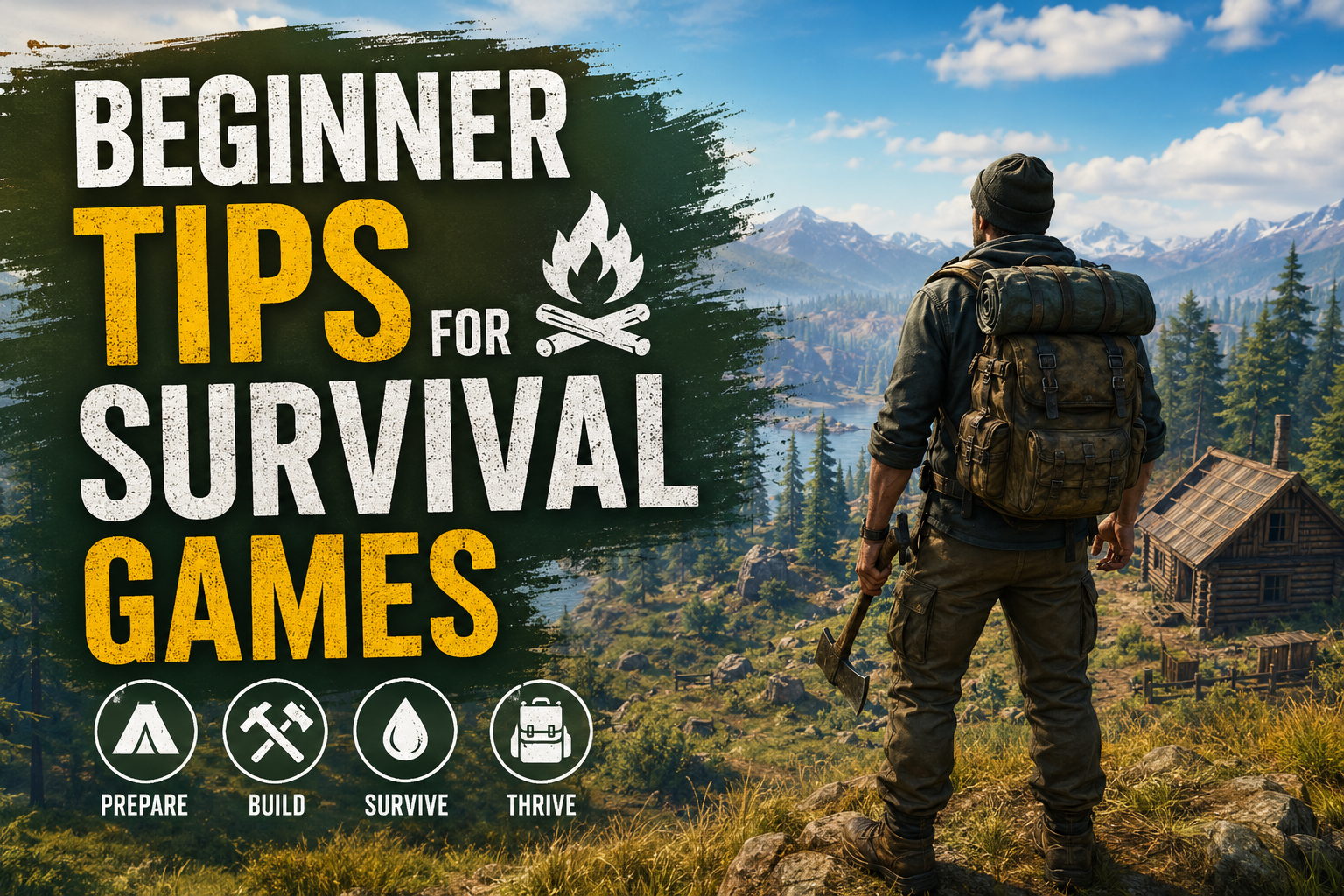
Survival games can be exciting, challenging, and sometimes a little confusing when you play them for the first time. I remember that when I started playing survival games, I often made simple mistakes because I did not understand how important basic resources, shelter, food, and planning were. At first, I thought surviving was mainly about fighting enemies, but later I realized that survival games are more about making smart decisions.
Whether you are playing a survival game with zombies, wild animals, monsters, or other players, the basic idea is usually the same. You need to collect resources, manage your health, find food, build a safe place, and explore the world carefully.
In this article, I will share some beginner tips for survival games that I personally find useful. These tips can help new players understand the basics and enjoy the game without feeling overwhelmed.
Understand the Game Before Going Too Far
My first advice for any beginner is to spend some time understanding the game. Every survival game has different rules, resources, crafting systems, and dangers. Before exploring the entire map, learn what your character needs to survive.
Look at the inventory and crafting menus. Check which resources are available around you. Learn how to collect basic materials and understand what they are used for.
I also recommend paying attention to the tutorial if the game provides one. Sometimes beginners skip tutorials because they want to start playing immediately. I used to do this too, but tutorials can save a lot of time later.
Understanding the basic mechanics makes everything easier.
Collect Basic Resources Early
Resources are extremely important in survival games. Wood, stone, food, water, and other materials are often needed for crafting tools, weapons, shelter, and other useful items.
When I start a new survival game, I usually focus on collecting basic resources before doing anything complicated. I do not try to collect everything I see. Instead, I collect the materials that I know I will need soon.
For example, wood may be useful for building a shelter, while stone may be required for basic tools. Food may help maintain health or energy.
Do not waste your inventory space on unnecessary items. Learn which resources are valuable and collect them according to your immediate needs.
Build a Safe Shelter
One of the most important things in many survival games is having a safe place to stay. A shelter gives you somewhere to store items, recover, craft equipment, and prepare for your next journey.
As a beginner, I would not recommend spending too much time building a huge base. Start with something simple and useful.
Your first shelter does not need to look beautiful. It just needs to protect you from common dangers. Once you understand the game better, you can build a larger and more organized base.
I also recommend thinking about the location before building. A shelter near important resources can save you a lot of walking. However, you should also consider whether the area is dangerous.
A good location can make survival much easier.
Do Not Ignore Food and Water
One mistake beginners often make is focusing too much on weapons and completely forgetting about food and water. In many survival games, your character needs regular food and sometimes water to maintain health and energy.
I always try to keep some food available before leaving my base. Running out of food far away from safety can create unnecessary problems.
Learn which food sources are easy to find and how the game allows you to prepare them. Some games require cooking before food becomes useful.
The same applies to water. If water is important in the game, learn where to find it and how to store it safely.
Basic survival needs should always be a priority.
Learn Crafting Step by Step
Crafting can look complicated when you first open the crafting menu. There may be dozens or even hundreds of possible items. My advice is not to try learning everything at once.
Start with basic tools. Then learn how to create simple weapons, storage items, shelter components, and other equipment.
As you play, you will naturally understand which items are useful and which ones can wait.
I personally find it easier to learn crafting by focusing on a few important recipes at a time. Once those recipes become familiar, move on to more advanced items.
There is no need to rush.
Be Careful While Exploring
Exploration is one of the most enjoyable parts of survival games, but it can also be dangerous. Beginners often explore too far without preparing properly.
Before leaving your shelter, check your health, food, water, equipment, and inventory space. Take only the things you actually need.
I also recommend learning your surroundings. Look for landmarks that can help you remember where your base is located.
Getting lost can be frustrating, especially when you are carrying valuable items.
If the game has a map, use it regularly. If there is no map, pay attention to mountains, rivers, buildings, trees, and other landmarks.
Good navigation skills become very useful as the world gets larger.
Do Not Fight Every Enemy
When I first played survival games, I often thought that I had to fight every enemy I saw. That approach usually created more problems than it solved.
You do not always need to fight.
If an enemy is stronger than you, avoiding it may be the smartest decision. Running away or taking another route can save your health, weapons, and valuable resources.
Before starting a fight, think about what you can gain and what you could lose.
If defeating an enemy gives you an important resource, the fight may be worth it. If there is nothing useful nearby, avoiding the fight might be better.
Survival is not always about winning every battle. Sometimes survival means knowing when not to fight.
Manage Your Inventory
Inventory management is another skill that becomes important very quickly.
Most survival games give players limited inventory space. Because of this, carrying too many unnecessary items can become a problem.
I recommend keeping your inventory organized. Separate important resources from items that you do not currently need.
If you have a storage system at your base, use it regularly. Keeping everything in your character’s inventory makes exploration more difficult.
Before leaving your base, ask yourself what you actually need for the trip. This simple habit can save a lot of space.
Upgrade Your Equipment
Basic equipment is useful in the beginning, but you should gradually upgrade your tools and weapons as you collect better resources.
Better equipment can make gathering, exploration, and combat easier.
However, I would not recommend upgrading everything immediately. Focus on the equipment that you use most often.
For example, if you spend most of your time collecting resources, improving your gathering tools may be more useful than crafting an advanced weapon that you rarely use.
Think about your play style and upgrade accordingly.
Learn From Your Mistakes
You will probably fail many times when playing a survival game. You might lose your items, get lost, run out of food, or enter an area that is too dangerous.
That is completely normal.
Instead of getting frustrated, try to understand what went wrong. If you ran out of food, carry more next time. If you got lost, learn the map better. If an enemy defeated you easily, improve your equipment before returning.
I believe this is one of the best parts of survival games. Every mistake teaches you something.
After a few hours, situations that once seemed difficult can become much easier.
Save Important Items
If the game has a storage system, do not carry all your valuable items everywhere. Keep important resources safely stored at your base whenever possible.
This is especially useful before exploring dangerous areas.
Losing rare items can be frustrating, particularly when you have spent a long time collecting them. Keeping backups or storing valuable resources can reduce the impact of unexpected failures.
I usually try to keep some basic supplies at my base so that I can recover quickly if something goes wrong.
Take Your Time
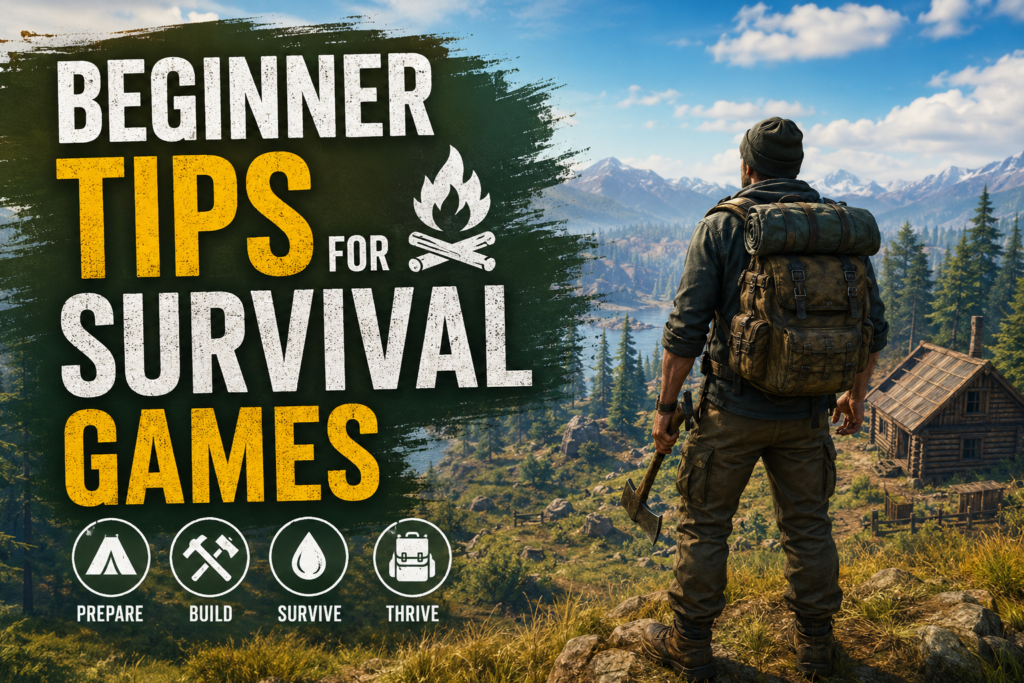
One thing I have learned from survival games is that rushing usually creates unnecessary problems.
You do not need to explore the entire world during your first hour. You do not need the strongest weapon immediately. You do not need to build a massive base on your first day.
Take your time and learn the game naturally.
Start with basic survival. Then improve your shelter, equipment, storage, and exploration abilities.
Once you understand the mechanics, you can start taking bigger risks.
Pay Attention to the Environment
The environment can give you important information. Changes in weather, darkness, sounds, animal behavior, and nearby structures can sometimes warn you about danger.
I recommend paying attention instead of focusing only on the character’s health bar.
If the game has a day and night cycle, learn how it affects enemies and visibility. Nighttime may be more dangerous in some games, while other games may provide unique opportunities during darkness.
Understanding the environment can give you an advantage without requiring better equipment.
Play Carefully in Multiplayer
Survival games with multiplayer can be very different from single player games. Other players may help you, compete with you, or create unexpected challenges.
If you are playing with friends, communication is very important. Decide who will collect resources, who will build, and who will explore.
Working together can make survival much easier.
At the same time, be careful when interacting with unknown players. You cannot always know their intentions, especially in games where players can attack each other.
Final Thoughts
Survival games may seem difficult when you first start, but they become much more enjoyable once you understand the basic mechanics. In my opinion, the most important thing is not becoming powerful as quickly as possible. It is learning how to make smart decisions.
Collect useful resources, build a safe shelter, manage food and water, organize your inventory, upgrade important equipment, and explore carefully. Most importantly, learn from your mistakes.
Every survival game has its own challenges, so you will need to adjust your strategy depending on the game you are playing. Do not worry if you fail during your first few attempts. Failure is part of learning.
With practice, you will become better at judging danger, managing resources, exploring new areas, and preparing for unexpected situations.
For me, that is what makes survival games so interesting. They are not only about fighting or collecting items. They are about planning, adapting, and making decisions when resources are limited. Once you understand that idea, survival games become much more fun and rewarding.